CARD FEE RULES
Cash discount program, dual pricing or surcharge: how each works and the rules in every state
A cash discount program lets card customers cover the card fee while cash customers pay less. Surcharges and dual pricing do the same job in other ways. Visa and Mastercard limit all three, and some states add their own rules.
- Updated November 10, 2026
- Sources linked
- General information, not legal advice
What is a cash discount program?
A cash discount program sets your prices so card customers cover the card fee. Posted prices are card prices, and cash customers get money off: a plate listed at $20.60 costs $20.00 in cash.
Truvana Tech, which wrote this guide, helps small restaurants and stores in DC, Maryland and Northern Virginia pass card fees on the way their state allows, in English or Spanish.
Credit card surcharge vs cash discount vs dual pricing
All three pass the card fee on to card customers. A surcharge is added at the register, so the strictest rules apply; a cash discount and dual pricing post the card price up front.
Credit card surcharge
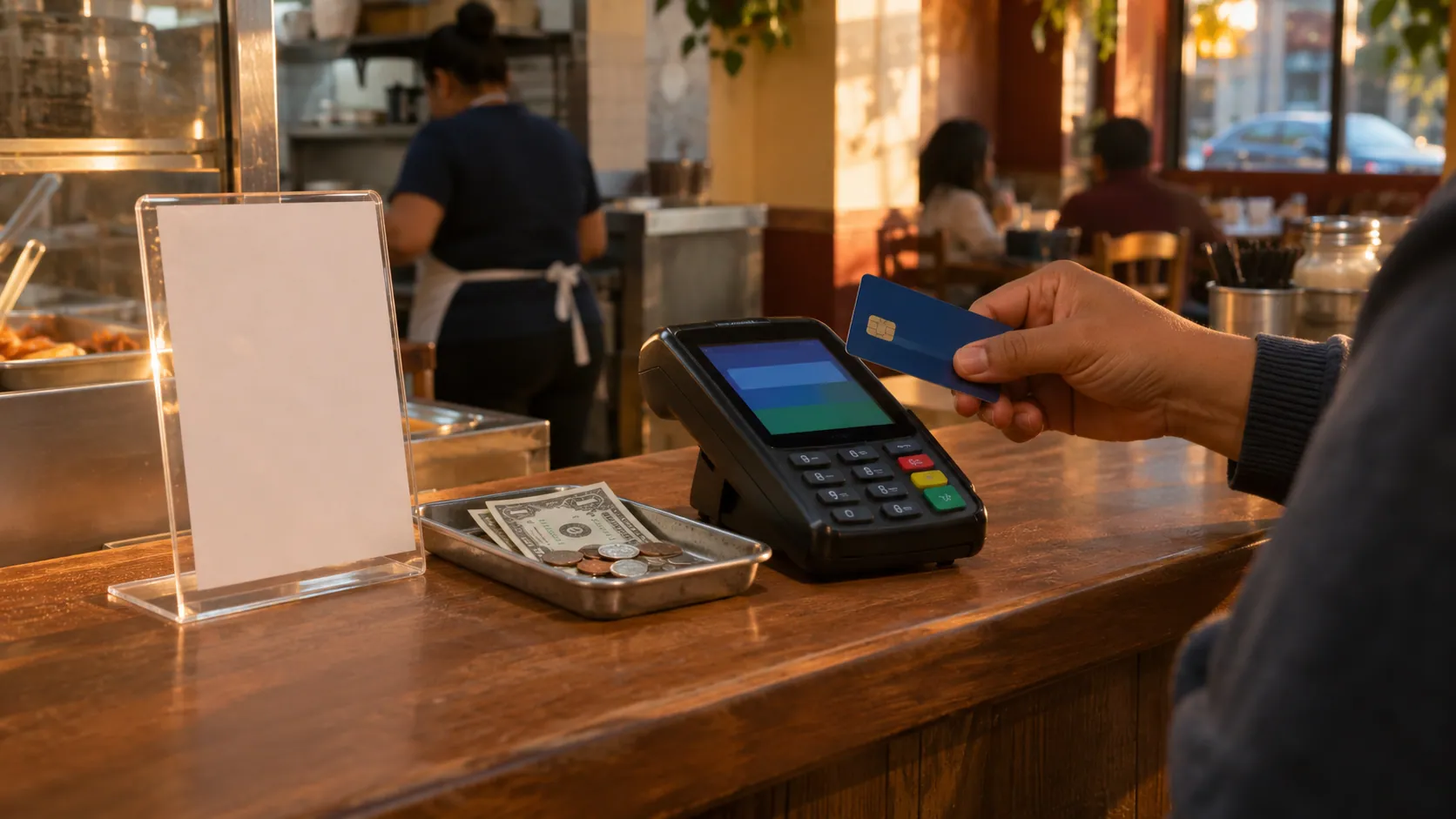
- ■Added at the register, on credit cards only
- ■Up to 3% on Visa, or your cost if lower
- ■Never on debit or prepaid cards
Cash discount
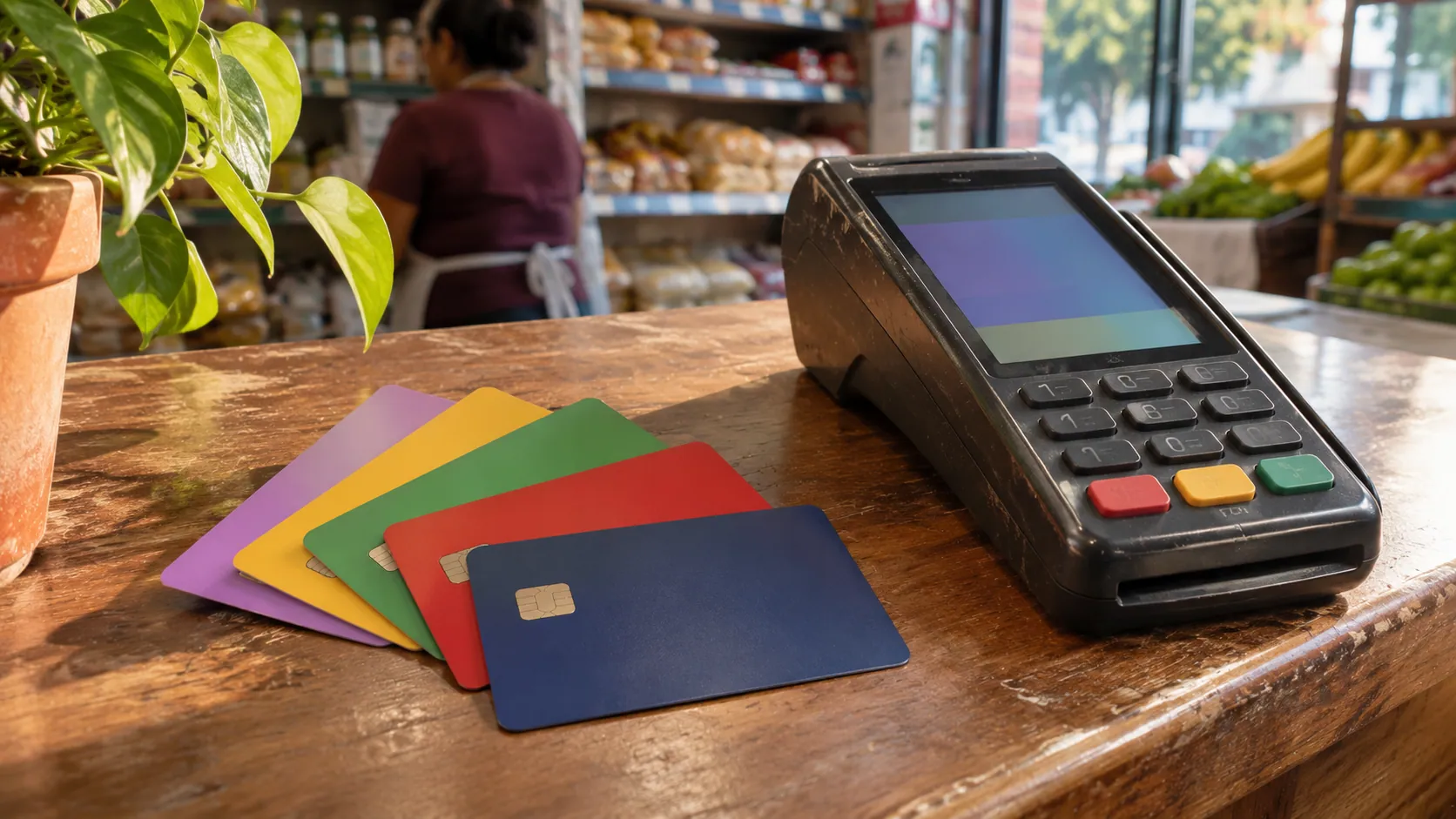
- ■Posted prices are card prices
- ■Cash customers get money off
- ■Debit cards pay the card price
Dual pricing
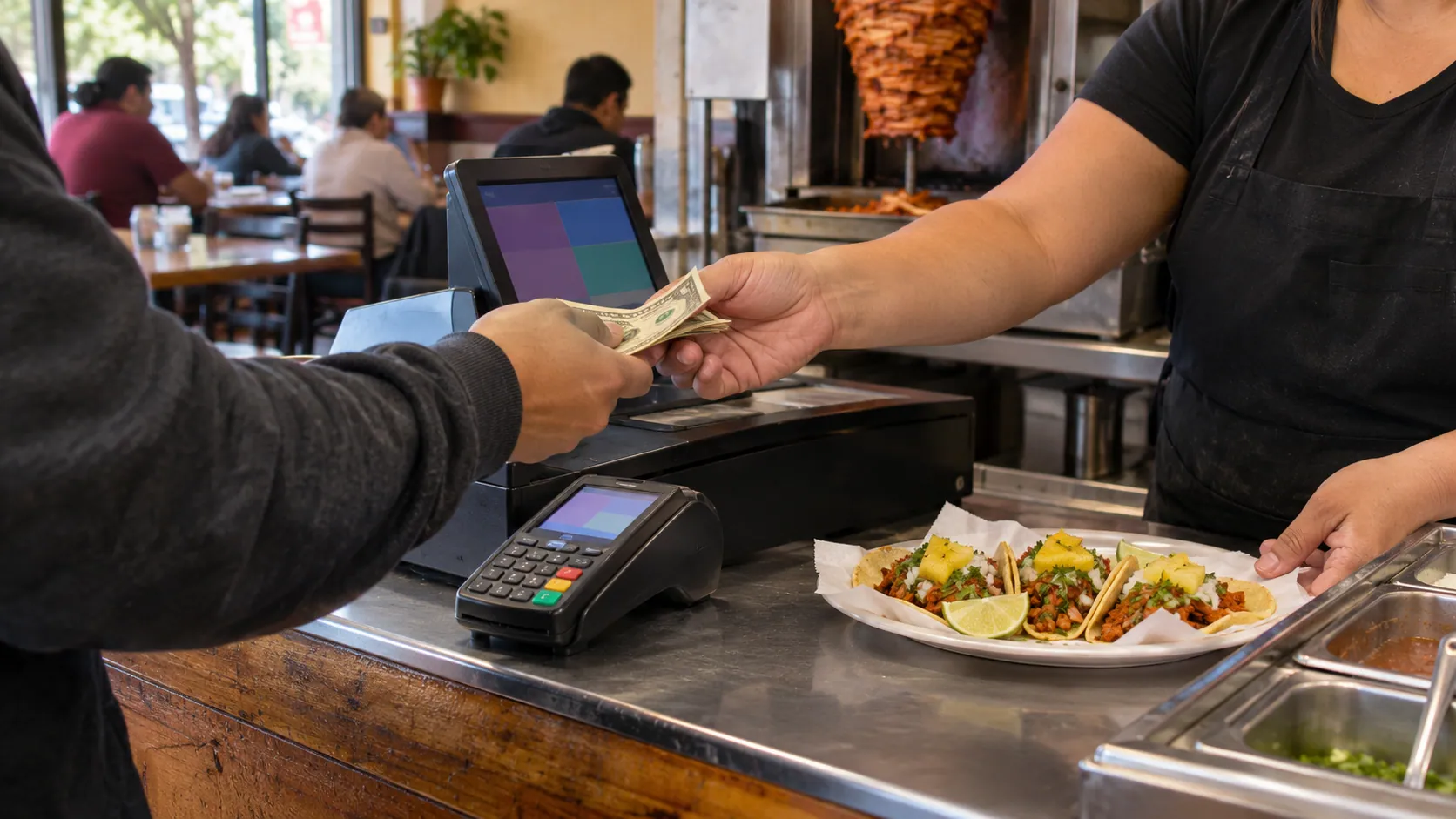
- ■A cash price and a card price on every item
- ■Both prices clear on the menu or shelf
- ■Debit cards pay the card price
One price, no program
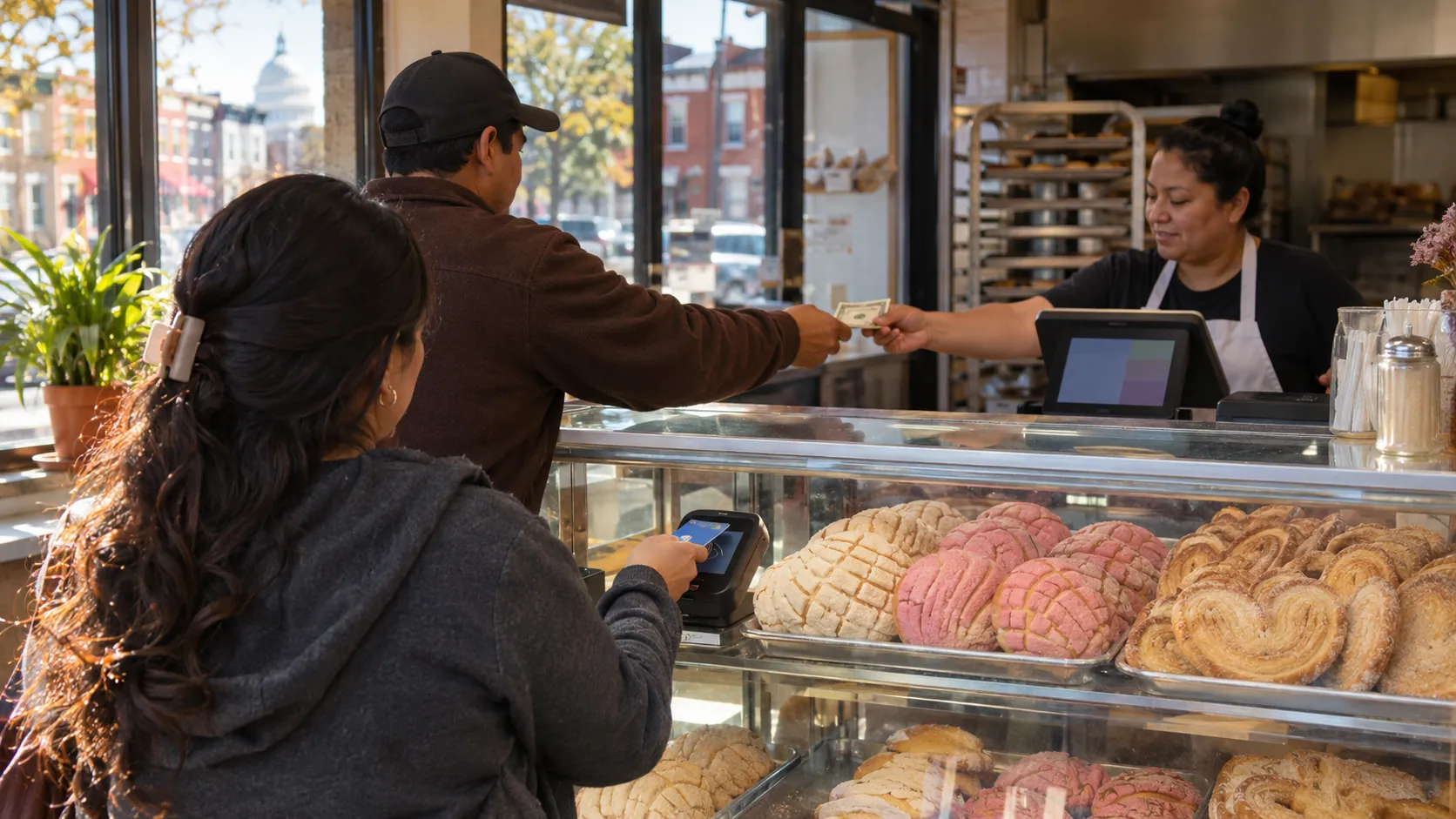
- ■Every customer pays the same price
- ■You pay the card fee on every card sale
The same $20.00 meal, three ways
| Menu shows | Cash | Credit card | Debit card | |
|---|---|---|---|---|
| No program | $20.00 | $20.00 | $20.00 | $20.00 |
| 3% surcharge | $20.00 and a surcharge notice | $20.00 | $20.60 | $20.00 |
| Cash discount | $20.60, the card price | $20.00 | $20.60 | $20.60 |
| Dual pricing | $20.00 cash and $20.60 card | $20.00 | $20.60 | $20.60 |
With a 3% card cost (an example), a $20.00 card sale leaves you $19.40 and a $20.60 one about $19.98.
Is a cash discount program legal?
Generally, yes, when it's a real discount: the card price is posted and cash customers pay less. Federal law stops card companies from forbidding one (15 U.S.C. § 1666f).
| Rule | What it means for you | Source |
|---|---|---|
| Cash discounts in state law | States that address them, like Massachusetts and Connecticut, allow one offered to everyone and clearly posted | Massachusetts; Connecticut |
| Discount or surcharge | A cash discount or dual pricing posts the card price up front, so Visa treats it as a discount; a fee added at checkout is a surcharge, even if it's called a "cash discount" | Visa |
| Surcharge cap | Up to 3% on Visa, or your cost of accepting the card if lower; up to 4% on Mastercard, or your average cost if lower | Visa; Mastercard |
| Notice | Tell your processor at least 30 days before you start a surcharge | Visa |
| Signs | Post the surcharge at the door, the register and online | Visa |
| Receipt | Show the surcharge as its own line, with the dollar amount | Visa; Mastercard |
| American Express | A surcharge on Amex must match what you charge on other cards | American Express |
| State limits | The lower limit wins: Minnesota allows 5%, but Visa still caps you at 3% | Minn. Stat. § 325G.051 |
Debit and prepaid cards
Never surcharged, even when the customer presses "credit" (Visa). With a cash discount or dual pricing, debit pays the card price, except perhaps in Louisiana, which now bars charging more for debit (Act 751).
What may change soon
A Visa and Mastercard settlement has its final hearing on November 16, 2026. If approved, both networks would cap surcharges at 3% or your cost. Nothing has changed yet (court order, June 9, 2026; Payments Dive, October 16, 2026).
How to set up a cash discount program
Set it up in this order, before you change a single price.
- 01
Check your state's rules
Some states ban surcharges or cap them, and Virginia requires advertised prices to include mandatory fees. Find your state in the table below.
- 02
Choose how you price
Post card prices with money off for cash, show both prices, or add a surcharge within the card network caps.
- 03
Post notices and match receipts
Put notices at the entrance, the register and your ordering page. A surcharge goes on its own receipt line, in dollars.
- 04
Set up the POS and your team
The POS has to tell cash, debit and credit apart, and your team needs one sentence to explain the prices.
What your cash discount sign should say
Your sign tells customers what paying by card costs before they order or pay. Pick the one that matches how you price, and post it in English and Spanish if your customers speak both.
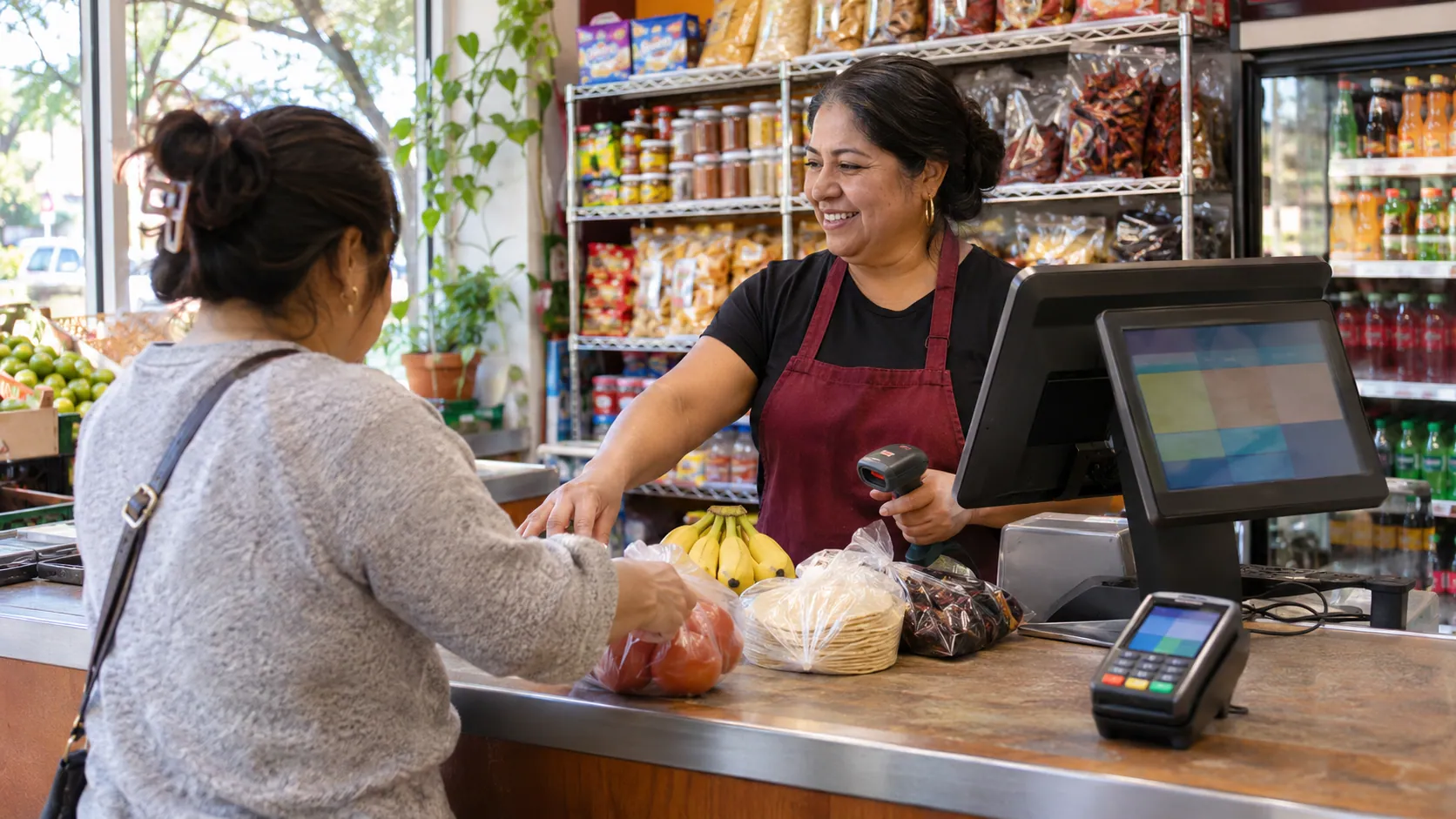
Cash discount
Card prices posted, money off for cash
Use it when every posted price is the card price. The sign reads: "Our prices are card prices. Pay cash and get 3% off."
- In Spanish: "Los precios marcados son con tarjeta. Si paga en efectivo, le descontamos el 3%."
- A cash sale shows the discount
Dual pricing
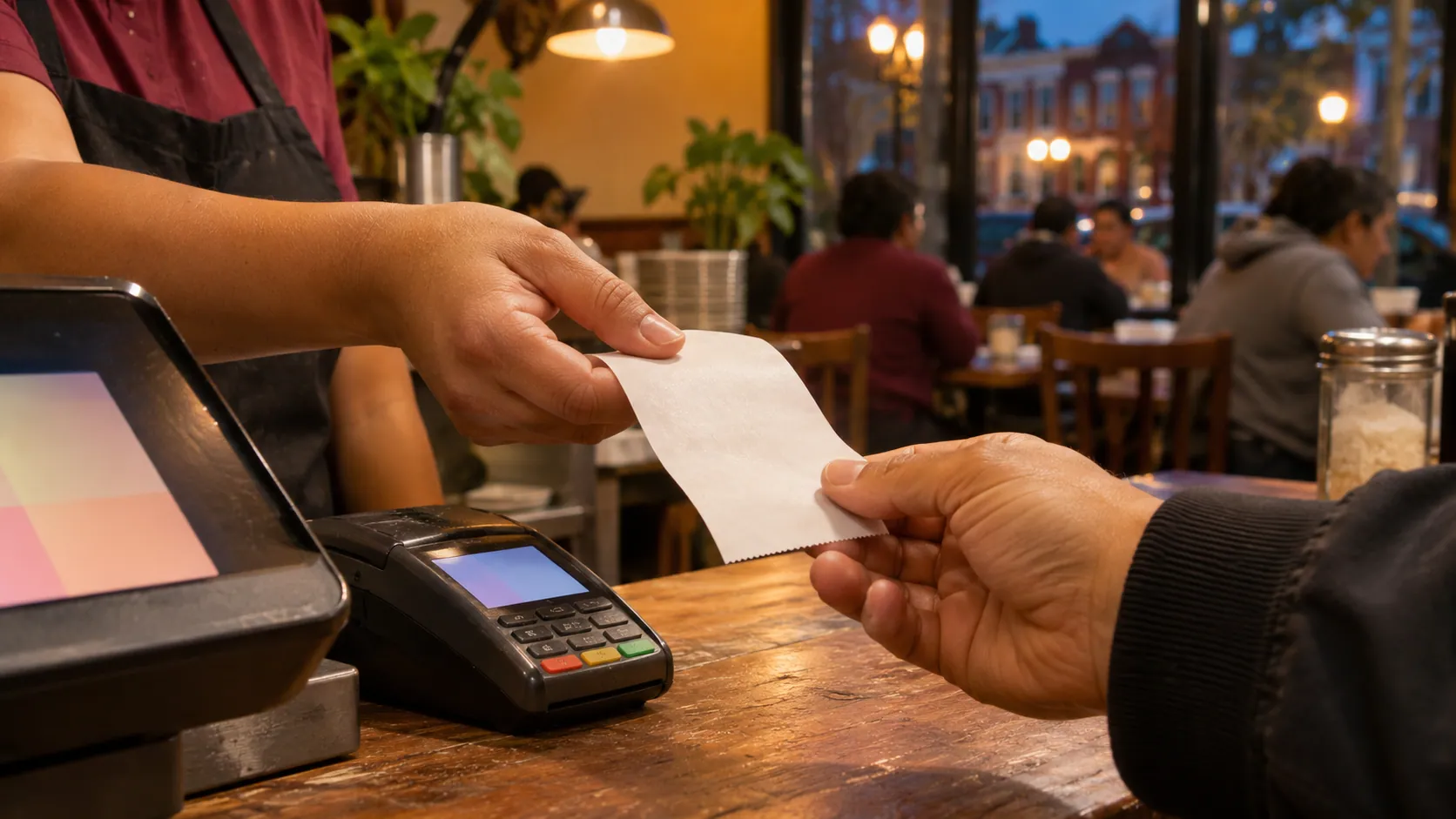
Two prices on every item
Use it when every item shows a cash price and a card price. The sign reads: "We show two prices: cash and card. Debit and credit cards pay the card price."
- In Spanish: "Mostramos dos precios: en efectivo y con tarjeta. Las tarjetas de débito y crédito pagan el precio con tarjeta."
- Both prices on every menu item and tag
Surcharge
The fee and its limit, before the sale
Use it only where your state allows a surcharge. The sign reads: "We add a 3% surcharge to credit card payments, no more than our cost of accepting them. No surcharge on debit cards."
- In Spanish: "Agregamos un recargo del 3% a los pagos con tarjeta de crédito, que no supera lo que nos cuesta aceptarlas. No hay recargo en tarjetas de débito."
- The surcharge on its own receipt line
The sign wording above is a plain example, not legal advice; some states, like Colorado, require their own.
What "0%" and "no fees" offers really mean
Some sellers promise processing at "0%" or "sin comisiones." The fee doesn't go away: your customers pay it, as a surcharge or a higher card price.
- Is the fee added at the register? Then it's a surcharge: capped at 3% and never on debit cards (Visa).
- Does your state allow it? If the setup breaks the card rules or your state's law, the problem is yours.
- What do you still pay each month? See our switching checklist.
What Truvana Tech does
In DC, Maryland and Northern Virginia, Truvana Tech explains your state's rules and sets up a cash price or a surcharge the way they allow.
Rates come in writing (pricing). No equipment lease, and a local team speaks your language.
Which system shows both prices
Our restaurant POS shows cash and card prices where the rules allow. Stores and food trucks can start with the retail POS or a card machine.
Set up a cash discount program that follows your state's rules
In DC, Maryland and Northern Virginia, we explain your state's rules, set up cash and card prices the way they allow and train your team, in English or Spanish.
Cash discount and surcharge rules in DC, Maryland and Virginia
Credit card surcharge laws by state
Most states have no surcharge law, so only the card network rules apply. A few ban surcharges or cap them below 3%, and more now require cash or all-in prices.
| State | Card surcharges | Refusing cash | Source |
|---|---|---|---|
| Alabama | No state law; Visa and Mastercard rules apply. | No state law. | NFIB surcharge guide, 2025 |
| Alaska | No state law; Visa and Mastercard rules apply. | No state law. | NFIB surcharge guide, 2025 |
| Arizona | No state law; Visa and Mastercard rules apply. | No state law. | NFIB surcharge guide, 2025 |
| Arkansas | No state law; Visa and Mastercard rules apply. Disclose the fee before the customer pays. | No state law. | Arkansas Attorney General: credit cards |
| California | Banned by state law, though a 2018 ruling limits enforcement. Safer: post card prices and discount cash. | No state law; San Francisco, Berkeley and Newport Beach require most stores to take cash. | California Attorney General: card surcharges |
| Colorado | Credit cards only: up to 2% or your actual cost, with the required sign and a receipt line. | Stores must accept cash for in-person sales since 2021, with limited exceptions. | Colorado SB 21-091 |
| Connecticut | Banned for every payment method. Cash or debit discounts are allowed with a posted notice. | Must accept cash in person, and can't charge cash payers more; some exceptions. | Conn. Gen. Stat. § 42-133ff |
| Delaware | No state law; Visa and Mastercard rules apply. | Must accept cash in person, and can't charge cash payers more; fines up to $2,500. | 6 Del. C. ch. 25H |
| Florida | Allowed since a 2015 court ruling; from July 2026, restaurants must show surcharges on menus and receipts. | No state law; Miami-Dade County requires most in-person retailers to take cash. | Laws of Florida ch. 2025-113 |
| Georgia | Allowed; state guidance says no more than your card cost, a sign at the entrance, and the amount on receipts. | No state law. | Georgia Consumer Protection Division, 2021 |
| Hawaii | No state law; Visa and Mastercard rules apply. | No state law. | Hawaii SB 3255 CD1 (Act 159, 2026) |
| Idaho | No state law; Visa and Mastercard rules apply. | No state law. | Idaho H 662 (2022) |
| Illinois | Allowed with no state cap; from 2027, posted prices must include fees customers can't avoid. | From January 1, 2028, restaurants, groceries, pharmacies and gas stations must take cash under $500. | 815 ILCS 505/2MMMM |
| Indiana | No state law; Visa and Mastercard rules apply. | No state law. | NCSL: surcharge statutes |
| Iowa | No state law; Visa and Mastercard rules apply. | No state law. | Iowa Code ch. 537 (2026) |
| Kansas | Allowed since January 1, 2025, if you clearly post the surcharge amount before the sale. | No state law. | K.S.A. 16a-2-403 |
| Kentucky | No state law; Visa and Mastercard rules apply. | No state law. | KRS 367.305 |
| Louisiana | Credit card surcharges allowed with no state cap; debit card surcharges banned since August 1, 2026. | No state law. | Louisiana Act 751 (2026) |
| Maine | Banned for credit and debit cards. A discount off the regular price for cash is allowed. | No state law for private businesses. | 9-A M.R.S. § 8-509 |
| Maryland | No state law; Visa and Mastercard rules apply. | From October 1, 2026, not allowed for $5 to $300 sales, 6 a.m. to 10 p.m.; mainly dine-in restaurants exempt. | Maryland 2026 Chapter 714 (HB 191) |
| Massachusetts | Banned for credit cards. A cash discount offered to everyone and clearly disclosed is allowed. | Stores must accept cash, by law since 1978. | M.G.L. c. 140D § 28A |
| Michigan | No state law; Visa and Mastercard rules apply. | No state law; Detroit requires most stores and restaurants to take cash. | Michigan Attorney General: card surcharges |
| Minnesota | Allowed up to 5% on credit cards; tell the customer at the sale and post a sign. | No state law. | Minn. Stat. § 325G.051 |
| Mississippi | No state law; Visa and Mastercard rules apply. | No state law. | NCSL: surcharge statutes |
| Missouri | No state law; Visa and Mastercard rules apply. | No state law. | Haake Law Group, 2026 |
| Montana | No state law for private businesses; Visa and Mastercard rules apply. | Stores must accept cash for in-person sales since 2023, with limited exceptions. | MCA 30-14-228 |
| Nebraska | No state law; Visa and Mastercard rules apply. | No state law. | NCSL: surcharge statutes |
| Nevada | Allowed; the Attorney General says keep it at or below your card cost, post it and itemize it. | No state law. | Nevada Attorney General, 2020 |
| New Hampshire | No state law; Visa and Mastercard rules apply. | No state law. | New Hampshire HB 1339 (2026) |
| New Jersey | Allowed on credit cards up to your actual cost; post the amount first, on menus too for restaurants. | Not allowed for in-person sales since 2019, with limited exceptions. | New Jersey P.L.2023, c.146 |
| New Mexico | No state law; Visa and Mastercard rules apply. | No state law. | NCSL: surcharge statutes |
| New York | Allowed on credit cards if the full card price is posted in dollars; no more than your card cost. | Must accept cash since March 21, 2026; bills over $20 can be refused. | N.Y. S1048-A (L. 2023, ch. 723) |
| North Carolina | No state law; Visa and Mastercard rules apply. | No state law. | N.C. HB 13 staff analysis, 2025 |
| North Dakota | No state law; Visa and Mastercard rules apply. | No state law. | NFIB surcharge guide, 2025 |
| Ohio | No state law; Visa and Mastercard rules apply. | No state law. | NFIB surcharge guide, 2025 |
| Oklahoma | Allowed on credit cards since November 1, 2025, up to 2% or your cost; post it first. | No state law. | Okla. SB 677 (2025), enrolled |
| Oregon | No state law; Visa and Mastercard rules apply. Online prices must include unavoidable fees since 2026. | Stores and restaurants must accept cash; $50 and $100 bills can be refused. | Or. SB 1176 (2025), text of ORS 659A.410 |
| Pennsylvania | No state law; Visa and Mastercard rules apply. | No state law; Philadelphia requires most stores and restaurants to take cash. | Pa. Act 132 of 1984 |
| Rhode Island | No state law; Visa and Mastercard rules apply. | Stores must accept cash; only online sales are exempt. | R.I. Gen. Laws § 6-13.1-30 |
| South Carolina | No state law; Visa and Mastercard rules apply. Card fees are subject to sales tax. | No state law. | S.C. Revenue Ruling #22-10 |
| South Dakota | No state law; the Attorney General says credit cards only, at or below your cost, disclosed. | No state law. | South Dakota Attorney General: card guidance |
| Tennessee | No state law; the Attorney General says show card and cash prices clearly before the sale. | No state law. | Tennessee Attorney General, 2021 |
| Texas | Risky: state law still bans credit card surcharges; a 2018 ruling protects only the merchants who sued. | No state law. | Tex. Bus. & Com. Code ch. 604A |
| Utah | No state law; disclose it clearly before payment, and don't call it a processing fee if it exceeds cost. | No state law. | Utah Division of Consumer Protection: surcharges and fees |
| Vermont | No state law; Visa and Mastercard rules apply. | No state law. | 9 V.S.A. § 2480p |
| Virginia | Allowed, but since July 1, 2025 advertised prices must include all mandatory fees, so checkout fees are risky. | No state law. | Va. Code § 59.1-608 |
| Washington | No state law; Visa and Mastercard rules apply. | No state law; unincorporated King County will require cash from July 1, 2027. | King County Code ch. 12.26 |
| Washington, DC | Allowed, but every fee must be disclosed clearly before the customer orders. | Not allowed since January 1, 2025; until May 8, 2027, places with an on-premises liquor license and restaurants open at 3 a.m. may refuse cash with a posted notice. | D.C. Code § 28-5402 |
| West Virginia | No state law; Visa and Mastercard rules apply. | No state law. | W. Va. Code Chapter 31 |
| Wisconsin | No state law; Visa and Mastercard rules apply. | No state law. | Wis. Stat. § 422.422 |
| Wyoming | No state law; Visa and Mastercard rules apply. | No state law. | Wyoming Statutes Title 40 (2026) |
This is general information, not legal advice. Sources checked November 10, 2026. Last updated November 10, 2026.
Changes in 2025 and 2026
| State and date | What changed |
|---|---|
| Kansas (January 1, 2025) | Surcharges are allowed if the amount is posted before the sale. |
| Virginia (July 1, 2025) | Advertised prices must include all mandatory fees. |
| Oklahoma (November 1, 2025) | Surcharges are allowed up to 2% or your cost, whichever is lower. |
| Colorado (January 1, 2026) and Oregon (online, January 1, 2026) | Advertised prices must show the total. |
| New York (March 21, 2026) | Stores and restaurants must accept cash. |
| Connecticut (July 1, 2026) | Advertised prices must include required fees; card surcharges stay banned. |
| Florida (July 1, 2026) | Restaurants must show any card surcharge on menus and receipts. |
| Louisiana (August 1, 2026) | No surcharges on debit cards. |
| Maryland (October 1, 2026) | Most businesses must accept cash for sales of $5 to $300. |
| Illinois (2027 and 2028) | Prices must include fees customers can't avoid from 2027, and restaurants, groceries, pharmacies and gas stations must take cash from January 1, 2028. |
Cash discount and surcharge questions
Is dual pricing legal in all 50 states?
Federal law protects cash discounts, and dual pricing is one way to show one. We found no clear answer yet on whether it counts as a surcharge in California, New Jersey or Texas.
Who pays the 3% credit card fee?
Without a program, you do. With a cash discount, dual pricing or a surcharge, card customers cover some or all of it, but debit cards are never surcharged (Visa).
How much is a credit card surcharge?
At most 3% on Visa and 4% on Mastercard, or your cost if lower (Visa; Mastercard). Colorado and Oklahoma cap it at 2%, and a few states ban it.
What does cash discount mean in accounting?
Money off for paying an invoice early, like 2% off within 10 days. That's a different thing from a cash discount program at the register, where posted prices are card prices and cash customers pay less.
What is the formula for calculating a cash discount?
Card price = cash price × (1 + your card percentage). At 3%, a $20.00 cash price becomes $20.60 by card, so the cash discount is $0.60, about 2.9% of the card price.
Are surcharges being removed?
No. Kansas and Oklahoma started allowing them in 2025, and Louisiana banned only debit card surcharges, in 2026. A settlement up for final approval on November 16, 2026 would allow up to 3% on both networks, let you refuse some card types and cut average credit card fees by at least 0.10 percentage points for five years (court order, June 9, 2026).
Get cash and card prices set up for your state's rules
Tell Truvana Tech your state and how you price today. A person replies in English or Spanish.
Tell us about your business
Your name and email are enough to start. Write in English or Spanish.