WASHINGTON, DC
Credit card surcharges in Washington, DC: the 2026 rules for restaurants and stores
Yes, a DC business can add a credit card surcharge, but every fee must be disclosed clearly before the customer orders, and Visa caps it at 3%. Since January 1, 2025, most businesses must also accept cash.
- Updated November 10, 2026
- Sources linked
- General information, not legal advice
Can a DC business add a credit card surcharge?
Yes, with conditions. DC law doesn't ban credit card surcharges, but fees must be disclosed "timely, prominently, and clearly" before the customer orders (DC Attorney General, August 9, 2023), and card network rules apply.
Truvana Tech, which wrote this guide, helps small restaurants and stores in DC, Maryland and Northern Virginia pass card fees on the way DC's rules allow, in English or Spanish.
| Card network limit | What it means for you | Source |
|---|---|---|
| A cap | Up to 3% on Visa, or your cost of accepting the card if lower; Mastercard allows 4% or your cost, so 3% or your cost, whichever is lower, fits both | Visa; Mastercard |
| Notice first | Tell your processor at least 30 days before you start | Visa |
| Signs and receipts | Post the surcharge at the entrance and the register, and show it as its own receipt line | Visa |
| Credit cards only | Never on debit or prepaid cards, even when the customer presses "credit" | Visa |
A fee on the bill comes too late
A fee that first shows up on the bill doesn't meet the Attorney General's standard (DC Attorney General, August 9, 2023).
Rather not add a fee at the register?
A cash discount or dual pricing posts the card price up front, so Visa treats it as a discount (Visa). Our cash discount guide compares the three.
Credit card surcharges at DC restaurants and stores
In DC, a card fee has to reach customers before they order or pay, and a customer paying cash has to be served. Here is what that means in practice.
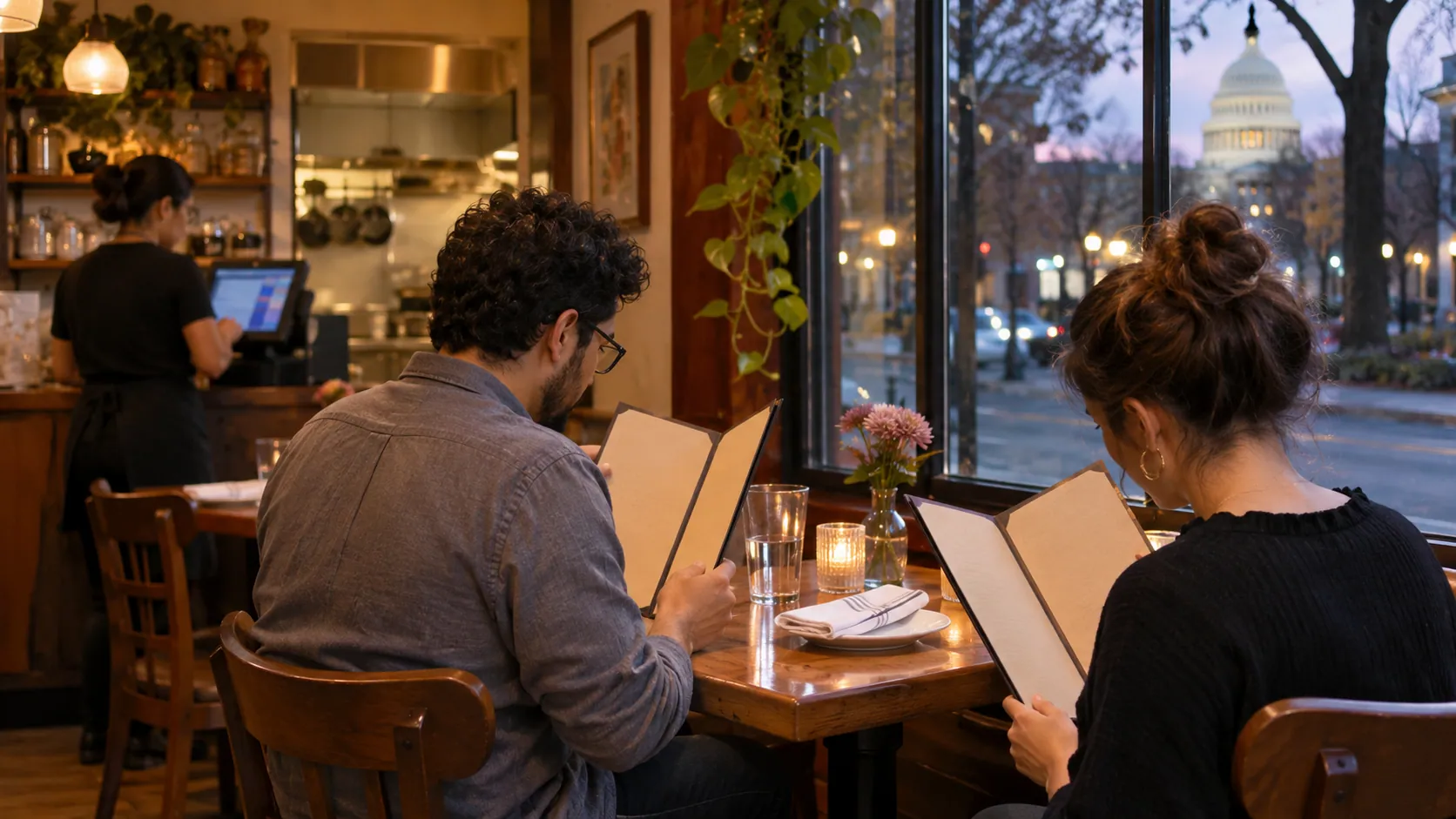
DC restaurants
Put the card fee on the menu
For a restaurant, "before the customer orders" means the menu, not the check. Put the surcharge notice or the two prices on the menu, the menu board, the QR menu and your online ordering page.
- A $20.00 dinner with a 3% surcharge: $20.60 by credit card, $20.00 by debit
- Dual pricing: "$20.00 cash, $20.60 card"; debit pays the card price
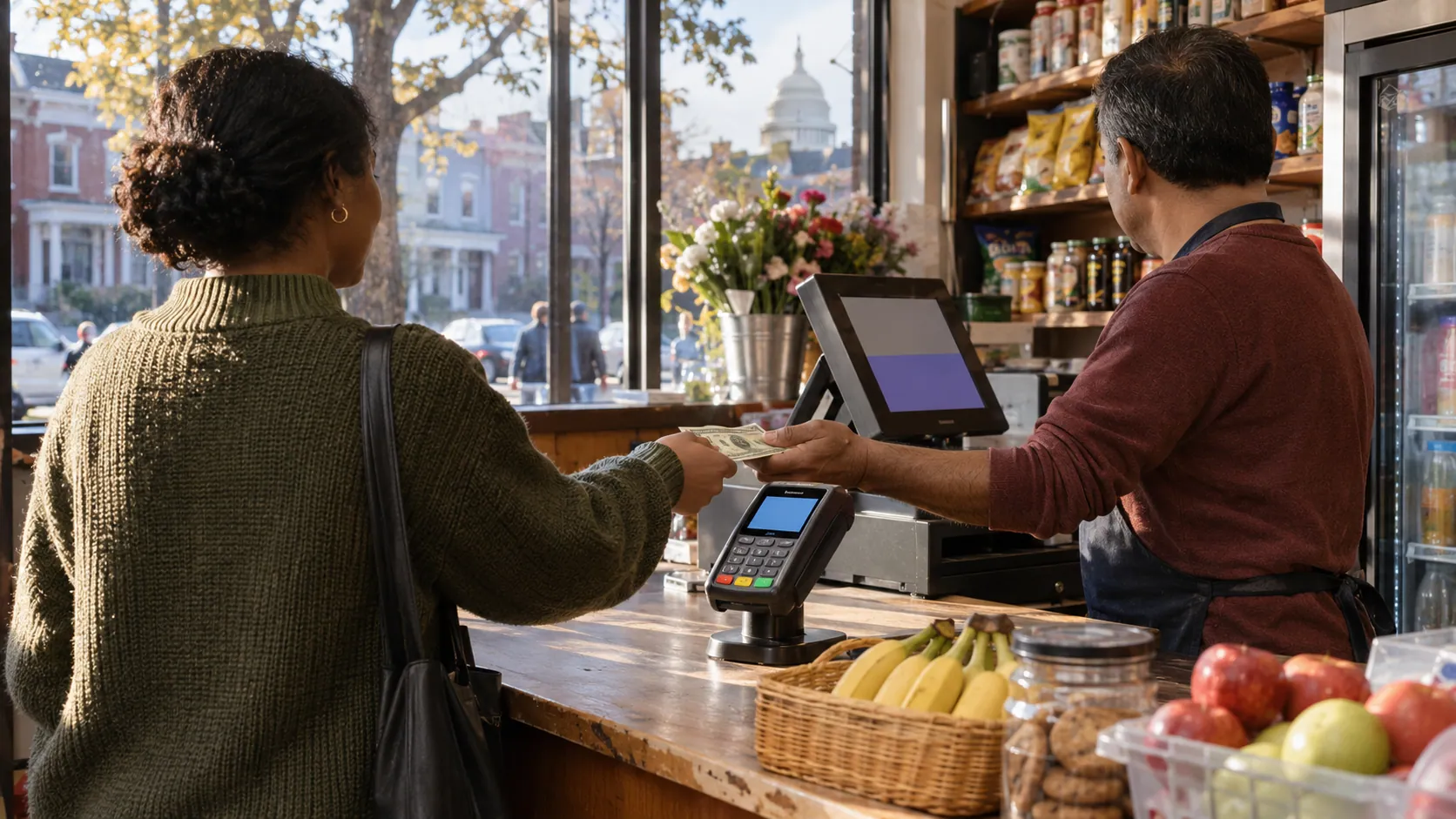
DC stores
Show the fee, and take cash
A DC store has two rules to follow: show any card fee before the sale, and take cash. Post the surcharge or the card price at the entrance, at the register and on shelf tags, and on your checkout page if you sell online.
- $10.00 of groceries with a 3% surcharge: $10.30 by credit card, $10.00 by debit
- Cash discount: $10.30 on the shelf, $10.00 in cash
- Either way, a customer paying cash gets served
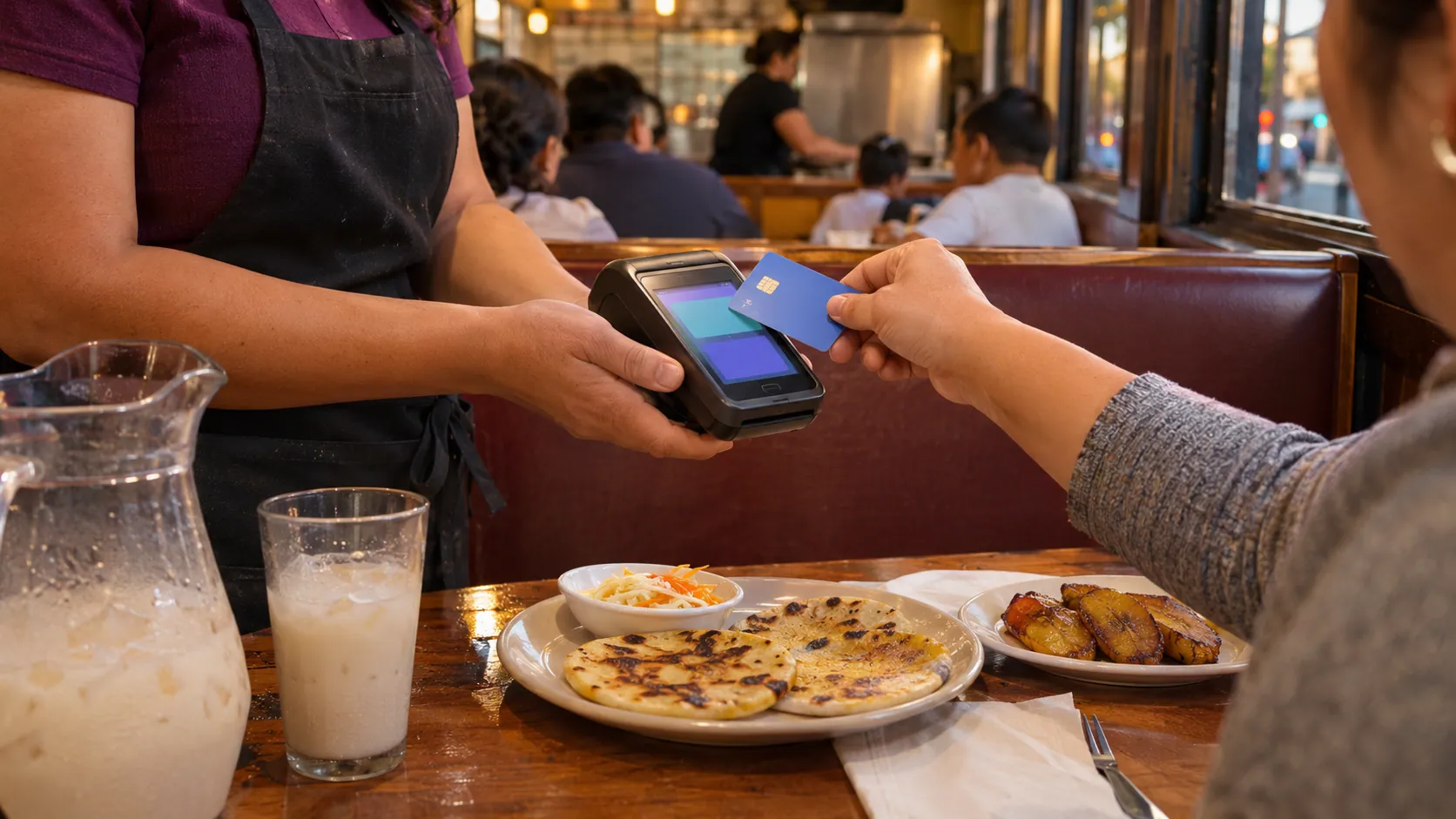
Service fees and tips
A service fee is still a fee
DC restaurants also price around the tipped wage, which keeps rising under Initiative 82. A service fee added to cover wages is still a fee, so it goes where a card fee goes: on the menu, before the order.
- DC's minimum wage from July 1, 2026: $18.40 an hour
- Tipped minimum: $10.30, rising each year toward 75% of the full wage
Truvana Tech installs restaurant POS and retail POS systems in DC that show cash and card prices where the rules allow.
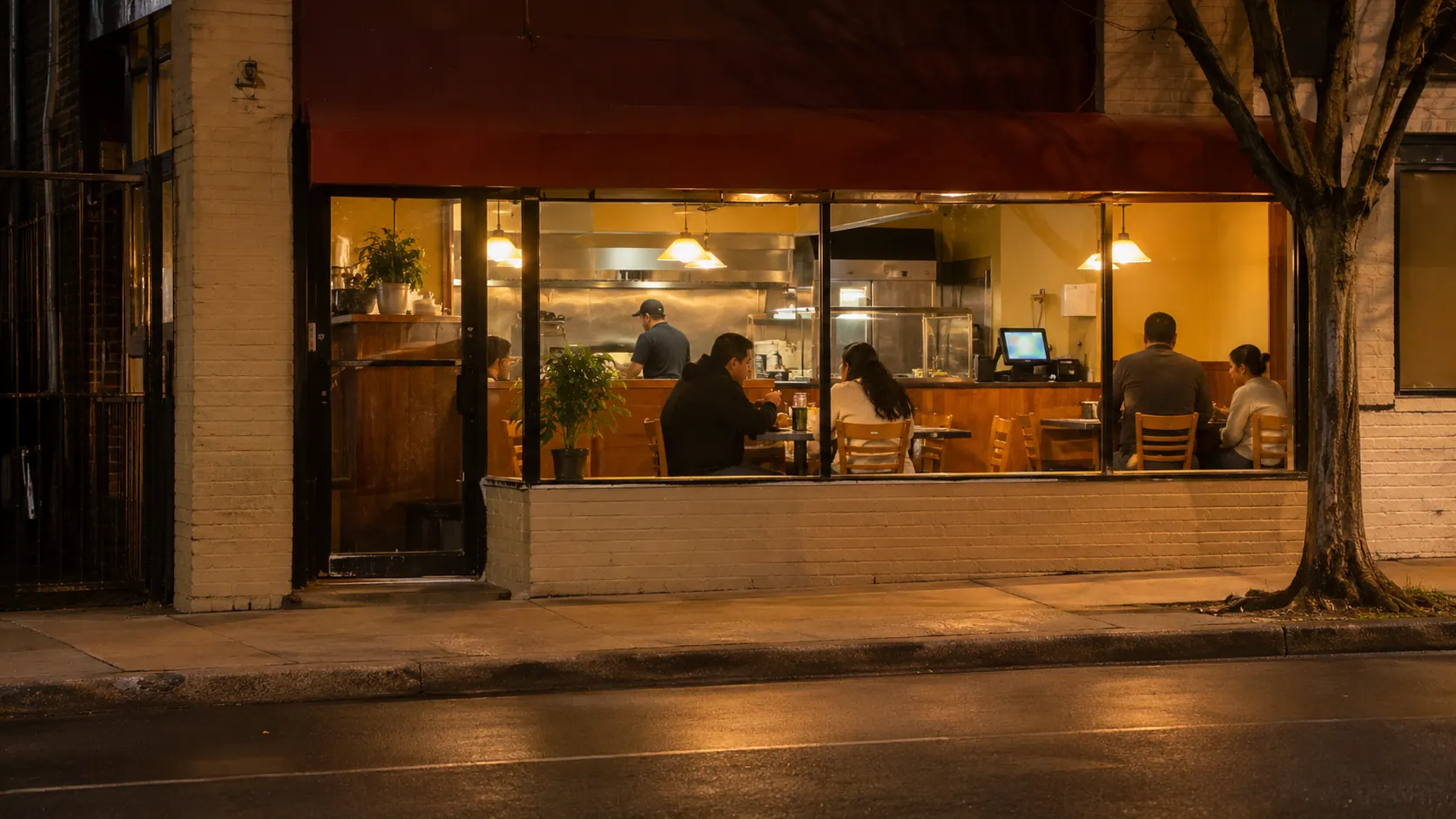
DC businesses must accept cash
Since January 1, 2025, DC businesses can't refuse cash or charge cash customers more (D.C. Code § 28-5402). A cash discount still works, because cash customers pay less.
| Exception | What it allows | Source |
|---|---|---|
| Sales by phone, mail or online | Not covered by the cash rule | D.C. Code § 28-5404 |
| A store with a free machine that turns cash into a prepaid card | Exempt from the cash rule | D.C. Code § 28-5404 |
| Places with an on-premises Class C or D liquor license | May refuse cash until May 8, 2027, if a notice on the door or the menu says so | D.C. Law 26-184 |
| Restaurants open 24 hours or at 3:00 a.m. at least two days a week | May refuse cash until May 8, 2027, with the same notice | D.C. Law 26-184 |
What the rule ends
The card-only counter, unless your place fits the temporary exception. The Council has extended it several times, so check it before you rely on it.
Locations in Maryland or Virginia
Maryland requires businesses to take cash for most sales of $5 to $300 from October 1, 2026 (Maryland Chapter 714), and we found no Virginia law that requires cash. See the Maryland and Virginia guides.
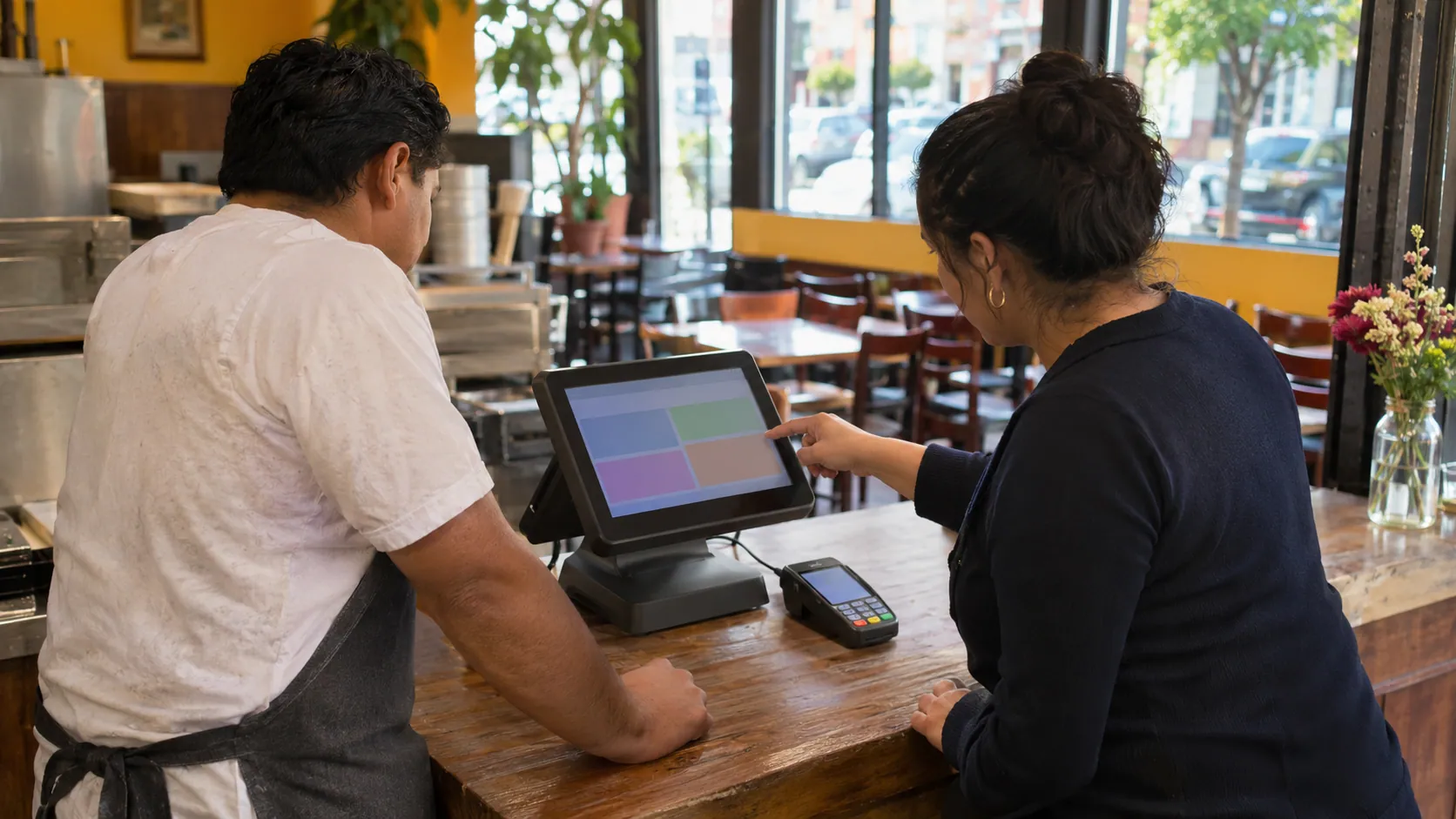
Set up cash and card prices that follow DC's rules
We explain DC's rules, set up a surcharge, a cash discount or dual pricing the way they allow, and train your team in English or Spanish.
What to post and what to say in DC
Post your card rule wherever customers decide to buy, and give your team one sentence to explain it, in English and Spanish.
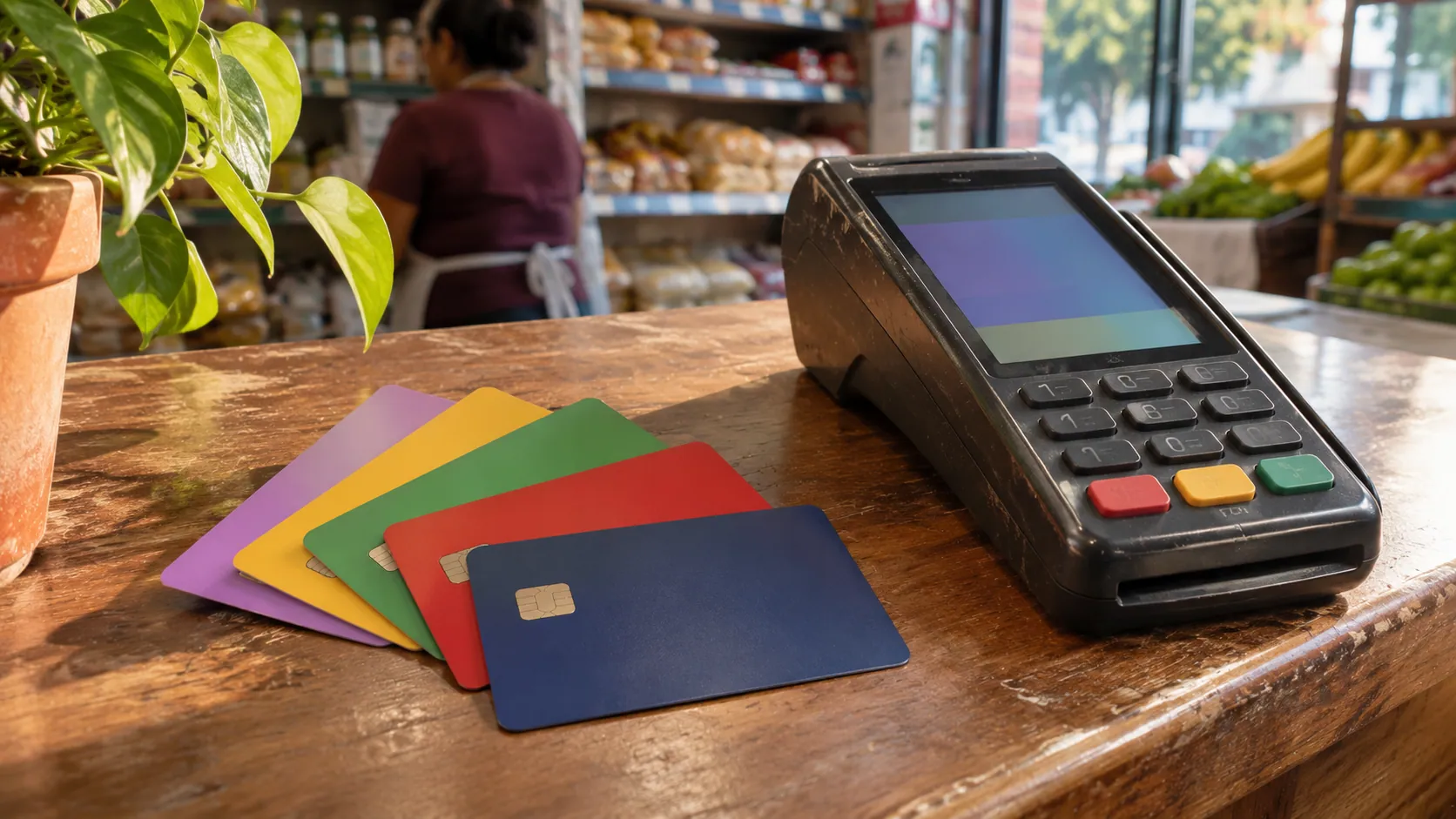
Surcharge notice
- ■"We add a 3% surcharge to credit card payments. No surcharge on debit cards."
- ■In Spanish: "Agregamos un recargo del 3% a los pagos con tarjeta de crédito. No hay recargo en tarjetas de débito."
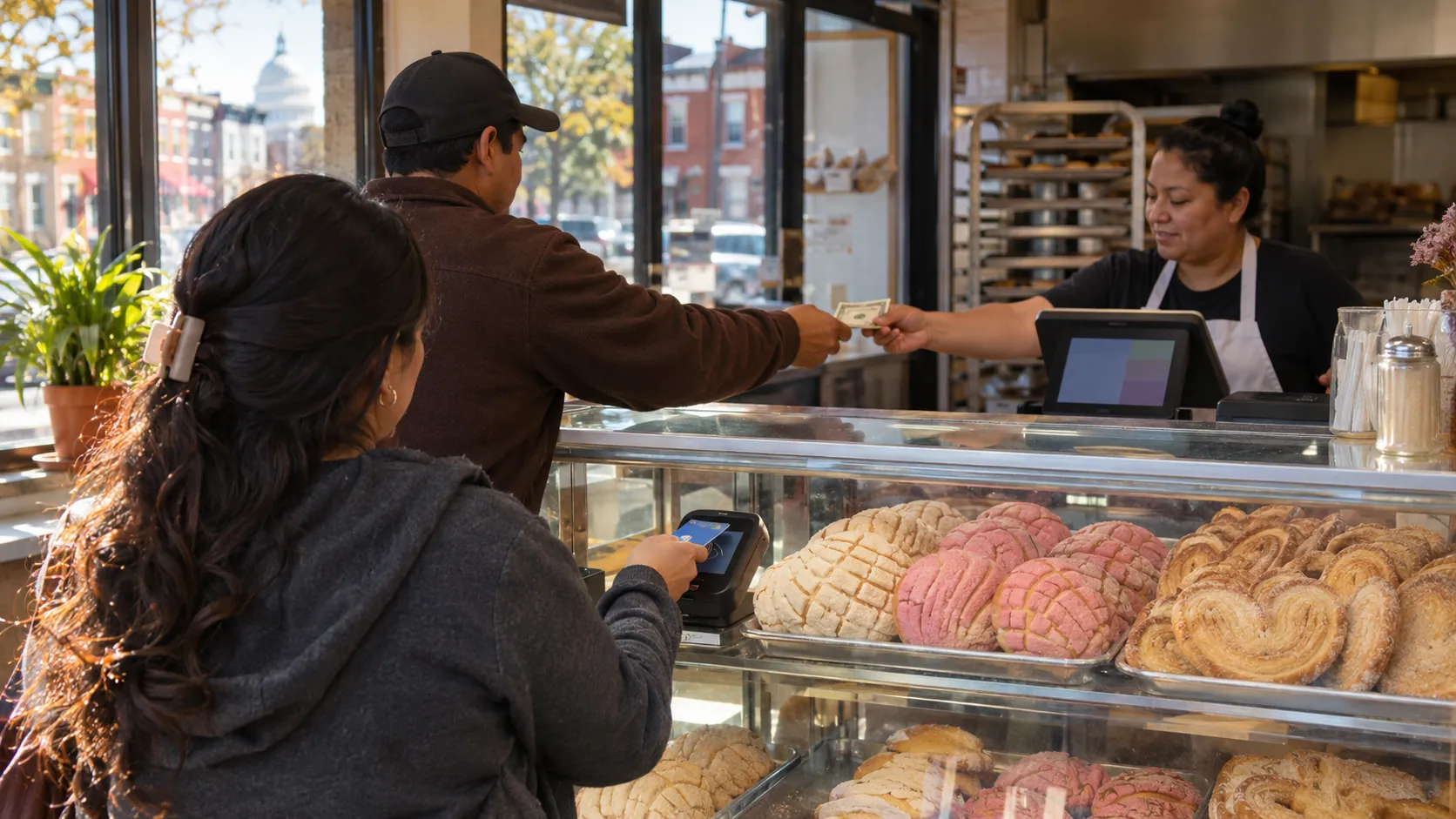
Dual pricing line
- ■"We show two prices: cash and card. Debit and credit cards pay the card price."
- ■In Spanish: "Mostramos dos precios: en efectivo y con tarjeta. Las tarjetas de débito y crédito pagan el precio con tarjeta."
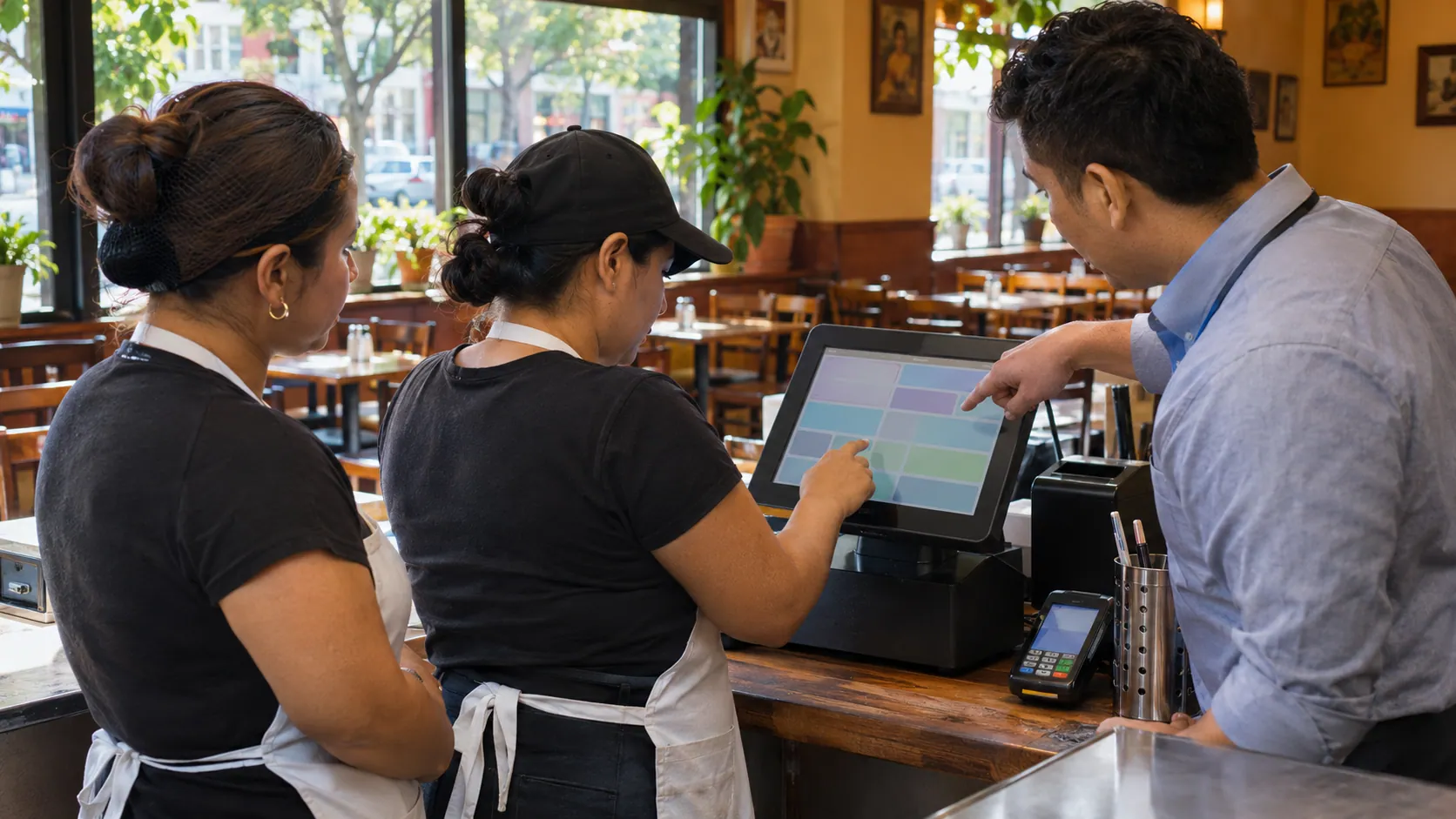
What your team says
- ■"The menu shows card prices; cash pays less."
- ■In Spanish: "Los precios del menú son con tarjeta; si paga en efectivo, paga menos."
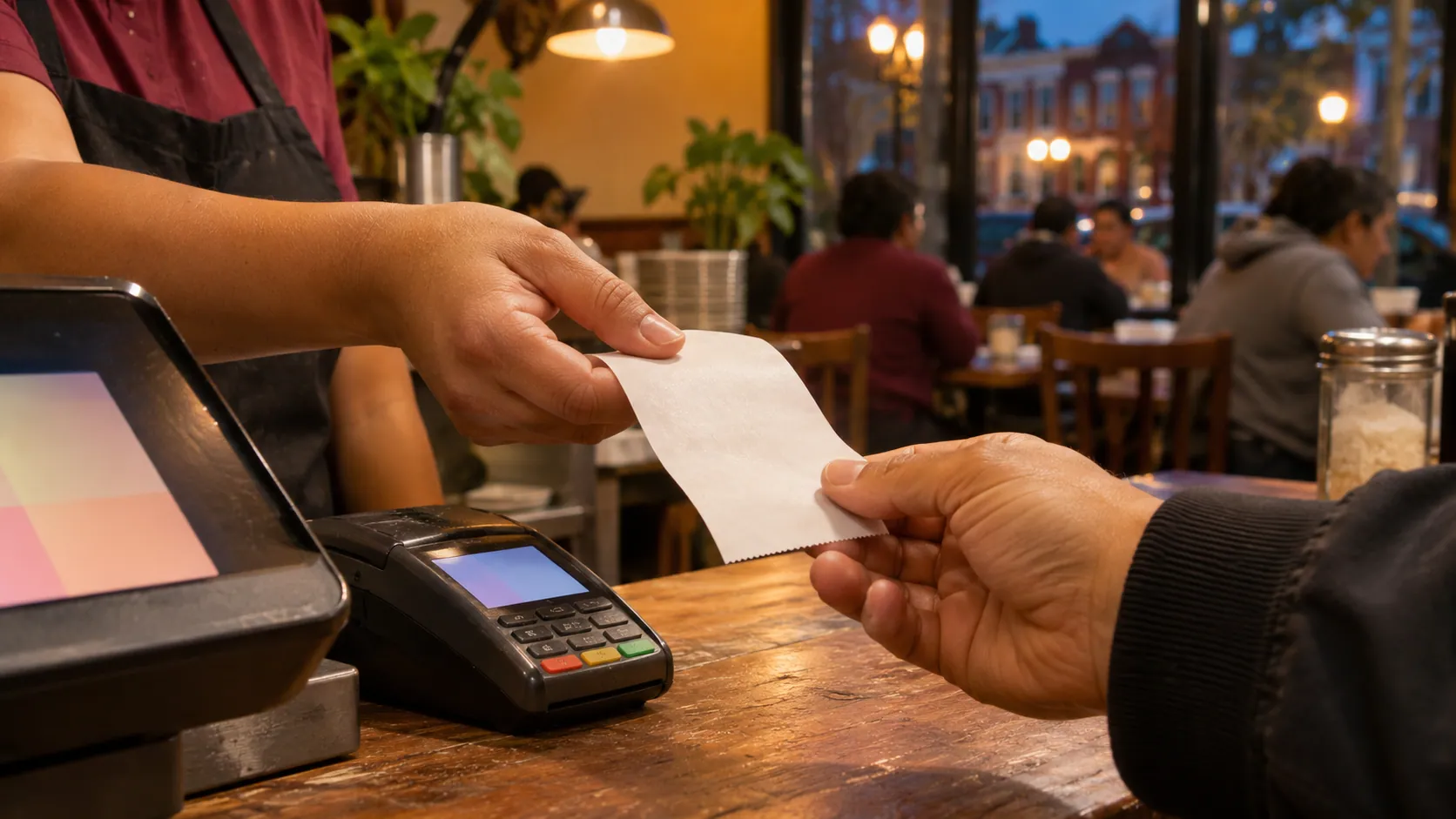
The receipt
- ■A surcharge shows as its own line
- ■A cash sale shows the discount
These are plain examples, not legal advice. More wording is in our cash discount guide.
Recent and pending changes in DC
Card fee rules in DC sit next to cash rules, wage rules and a bill on card fees. These are the dates to know, all checked on November 10, 2026.
| Date | What changes |
|---|---|
| January 1, 2025 | Businesses must accept cash (D.C. Code § 28-5402) |
| July 1, 2026 | DC's minimum wage is $18.40 an hour; after the July 2025 changes to Initiative 82, the tipped minimum is $10.30 and rises each year toward 75% of the full wage (National Law Review) |
| November 16, 2026 | Final hearing on the Visa and Mastercard settlement; see what may change |
| May 8, 2027 | The temporary cash exception for places with a liquor license and late-night restaurants ends, unless the Council extends it again (D.C. Law 26-184) |
| Pending | The Fair Swipe Act (B26-0138) would stop card fees on the tip and tax parts of a bill; it was in committee at our last check (Axios, February 20, 2025) |
This is general information, not legal advice. Sources checked November 10, 2026. Last updated November 10, 2026.
Credit card surcharge rules next door
DC card fee questions
Is it legal to charge a 3% credit card fee in DC?
Yes, if you disclose it clearly before the customer orders (DC Attorney General, August 9, 2023) and follow the card rules. Visa caps a surcharge at 3% or your cost, whichever is lower, and bans it on debit and prepaid cards (Visa).
Do DC restaurants charge for credit card use?
They may: a DC restaurant can add a surcharge or show cash and card prices if the fee is disclosed before the order. Since 2025, it can't refuse cash unless it has an on-premises liquor license or is open at 3:00 a.m. and posts a notice, under a temporary law that ends May 8, 2027 (D.C. Law 26-184).
What are the credit card surcharge laws in Washington state?
Washington State is a different place from Washington, DC. It has no surcharge law of its own, so the Visa and Mastercard rules apply there (NFIB, 2025). Every state is in our state table.
What is the average credit card surcharge fee?
We know of no official average. What is fixed is the ceiling: 3% or your cost on Visa (Visa), and 4% or your cost on Mastercard (Mastercard).
Why are businesses charging 3% to use a credit card?
Because every card sale costs them a fee, often about 2.3% to 2.9% plus a few cents for in-person flat rates (see pricing). Visa allows a surcharge of up to 3%, so it moves that cost to customers who pay by credit card.
Which states ban credit card surcharges?
As of November 10, 2026, Connecticut, Maine and Massachusetts ban them. California and Texas still have bans in their laws that 2018 court rulings only partly limit, and Colorado and Oklahoma cap them at 2%.
What would the Fair Swipe Act save a DC restaurant?
The Restaurant Association Metropolitan Washington estimated a full-service restaurant could save about $14,500 a year (Axios, February 20, 2025). On a $26.00 card payment with $2.00 of tax and a $4.00 tip, $0.18 of a 3% fee is charged on the tax and tip, the part the bill would stop.
Get cash and card prices set up for DC's rules
Tell us how you price today. A person replies in English or Spanish.
Tell us about your business
Your name and email are enough to start. Write in English or Spanish.